The tradition
The joust, explained
Where jousting comes from, how the tilt and the lance work, why knights carry colours, and what a dinner show borrows from the Middle Ages.
Book your evening ↗Quick answer
A joust was a mounted duel with lances, which began as a drill for heavy cavalry and became a sport of courage and skill by the 14th and 15th centuries. A barrier called the tilt kept the horses apart, and the wooden lances broke against the shield. Knights carried coats of arms so that others could recognise them. A castle dinner show borrows the horses, the lances and the colours, and wraps them in a story, lighting and a feast.
A meeting, not just a duel
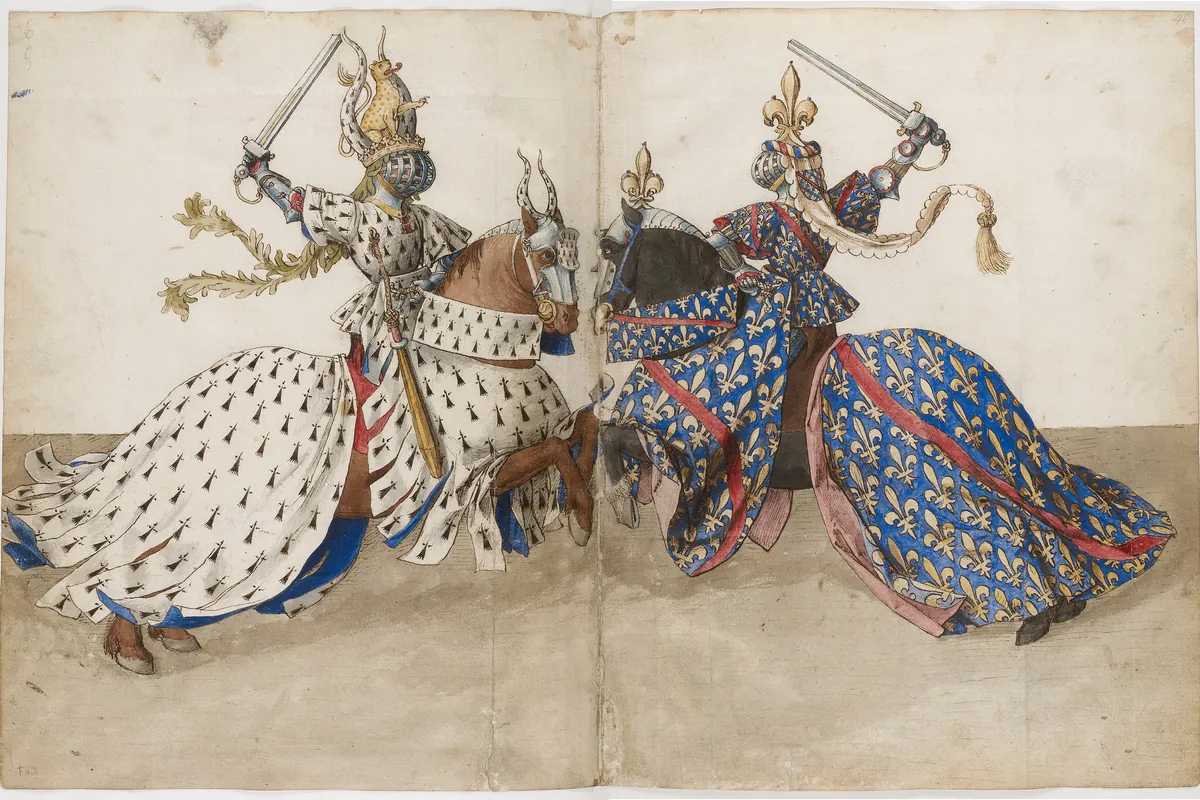
The English Wikipedia says the word joust comes from the Old French joster, to approach or to meet, and entered English around 1300. In the high Middle Ages a joust was a meeting between two fighters and was not limited to lances: they might continue with shorter weapons after the charge. The same article describes tournaments of that period as rougher affairs than the later chivalric ones, fought in groups. The tidy picture of two knights charging past each other belongs mostly to the late Middle Ages.
The tilt and the lance
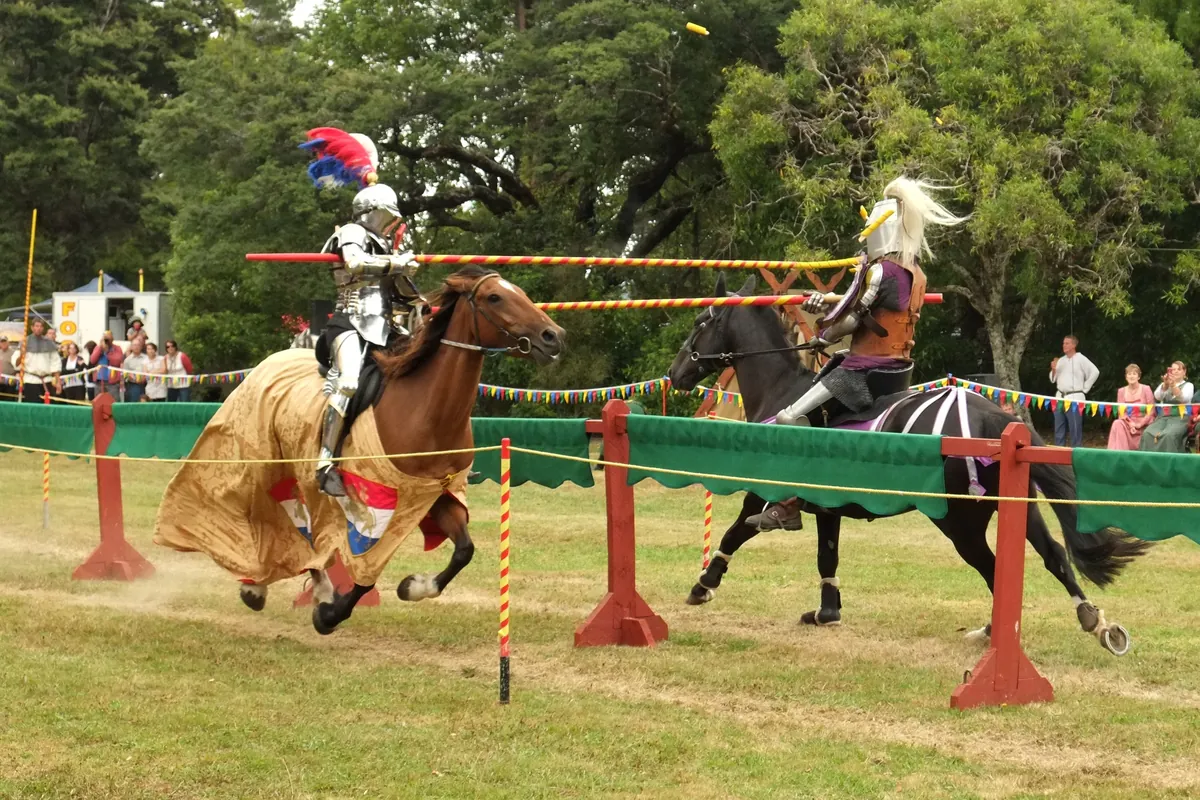
The article says a cloth barrier appeared at some point in the 14th century and became a wooden fence in the 15th, known as the tilt barrier, and the word tilt came to mean the joust itself around 1510. Its purpose was to prevent collisions and to hold the combatants at the best angle for breaking the lance. A jousting lance is wood with a blunt metal tip, made to break on the shield instead of piercing the rider, while the article says war lances were metal.
Armour and weight
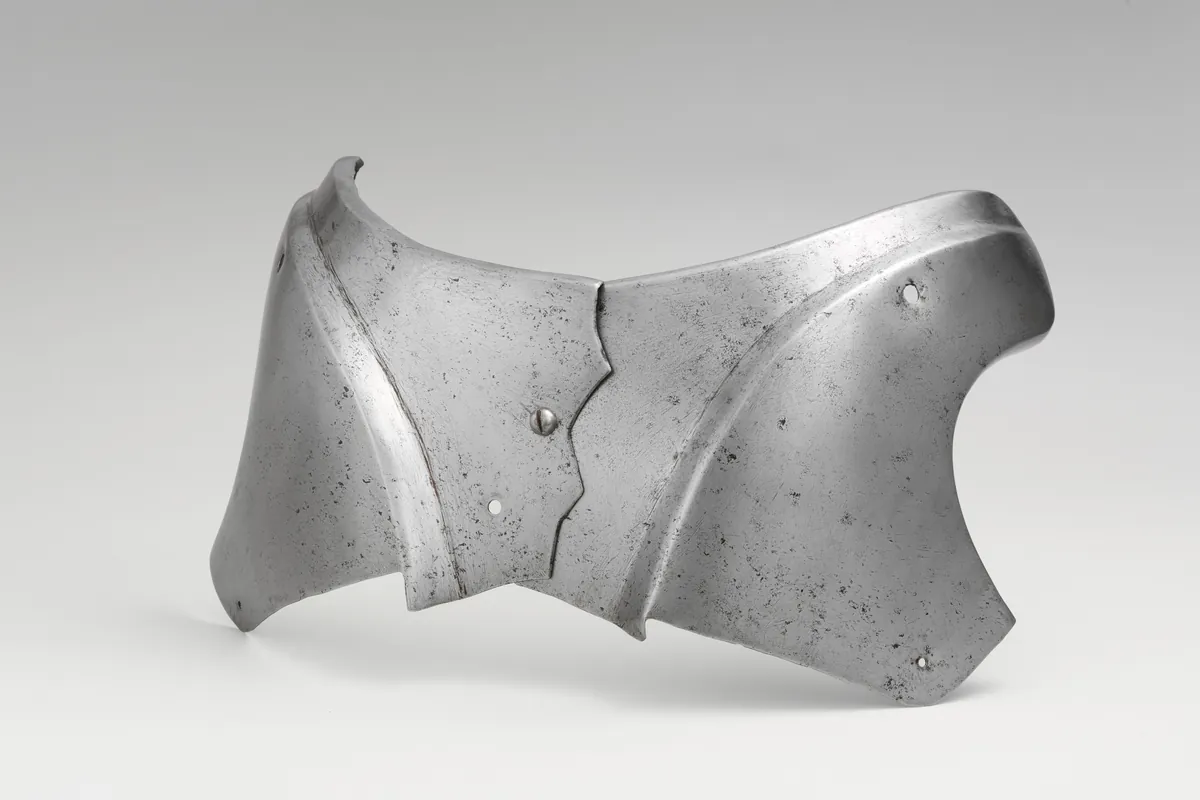
Specialised jousting armour was made in the late 15th and 16th centuries, and Wikipedia says it was heavier than armour for battle: as much as 50 kilograms against about 25 for field armour. The article notes that the heaviest German forms of the 16th century gave rise to the modern idea that medieval armour was clumsy. It also names two sporting forms of the 15th and 16th centuries: the lighter Rennen, where the aim was to hit the opponent’s shield, and the heavier, full-contact Stechen.
The horse

Two kinds of horse were common in the joust, according to the article: warmblood chargers, bred for agility and stamina, and larger destriers, which it compares with today’s Andalusian. Horses wore a caparison, a cloth showing the owner’s heraldic signs, and a protective plate over the head called a chanfron. The Andalusian is a Spanish breed, recognised as distinct since the 15th century, and Wikipedia calls it a war horse prized by the nobility. Horsemanship is one of the things the castle show’s booking page promises.
Why knights wore colours
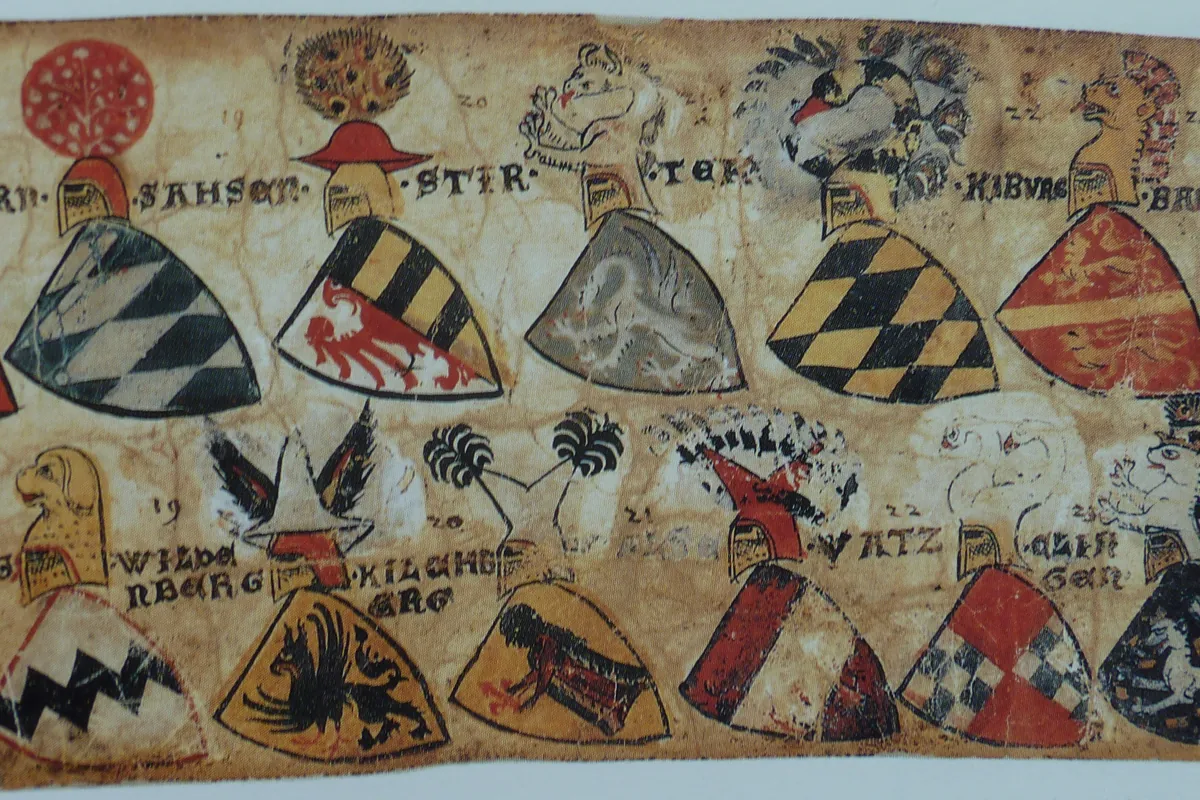
Heraldry gave a knight a way to be known. The Wikipedia article describes coats of arms on shields, with helmet, crest and banners, and explains that regular, hereditary designs developed in the High Middle Ages. It repeats a common claim that face-guarded helmets made commanders hard to recognise, and says heralds became experts on the arms and rank of knights. The castle show’s colour zones borrow that idea in simple form: a colour for each part of the room and a knight to cheer for.
Spain and the long afterlife
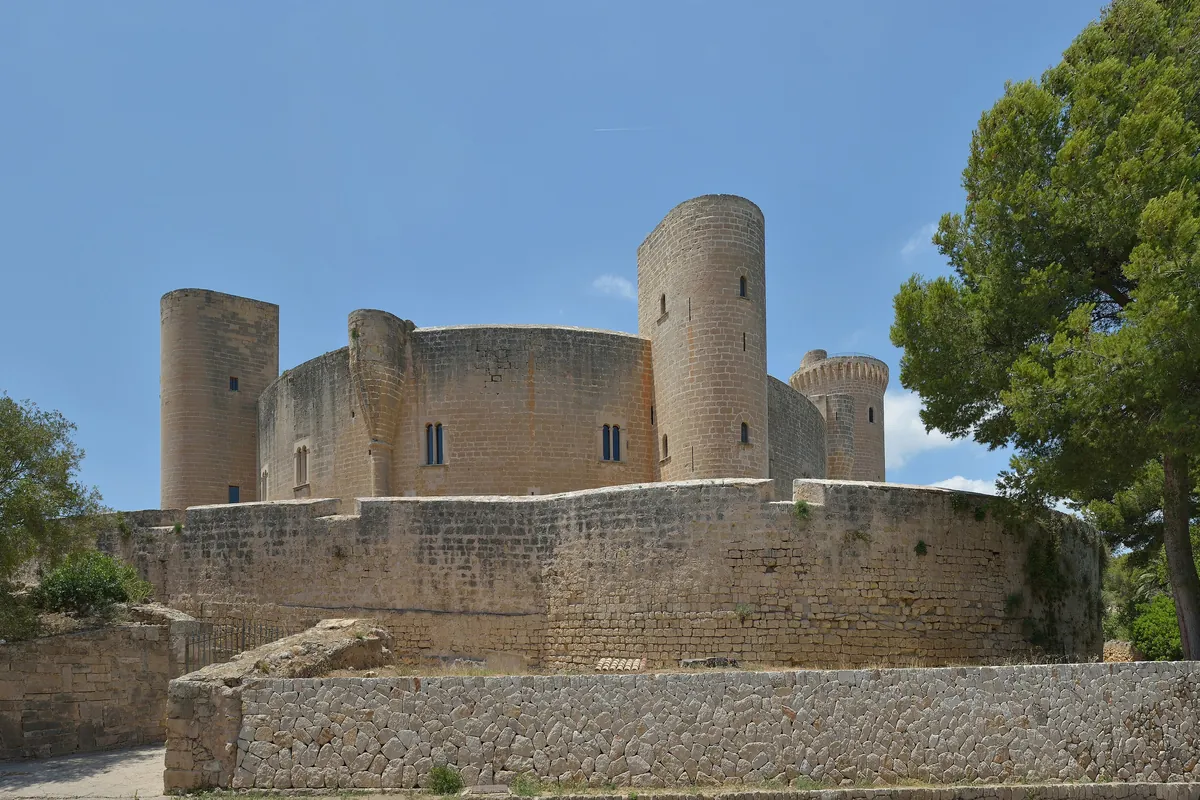
In 1434 the Leonese knight Suero de Quiñones and ten companions held a bridge on the pilgrim road to Santiago and swore to break 300 lances, according to Wikipedia. Jousting stayed popular with the nobility of England, Germany and elsewhere through the 16th century and ended in France after the death of King Henry II in an accident in 1559. It faded in the 17th, one attempt to revive it was the Eglinton Tournament of 1839 and it is now the state sport of Maryland, per the article. Theatrical re-enactment grew from the 1970s.
What a dinner show keeps and changes
The booking page for the castle promises jousting, sword fights and horsemanship in an arena, with a feast and a story. It does not claim to be a historical tournament, and Wikipedia says the company’s first shows came from Spain in the late 1960s and that the current production changes every six to seven years. Treat the evening as theatre that borrows from the tradition: the lance and the horse are real, and the rest is staged. For the full ticket details, read the worth-it guide.
Sources